
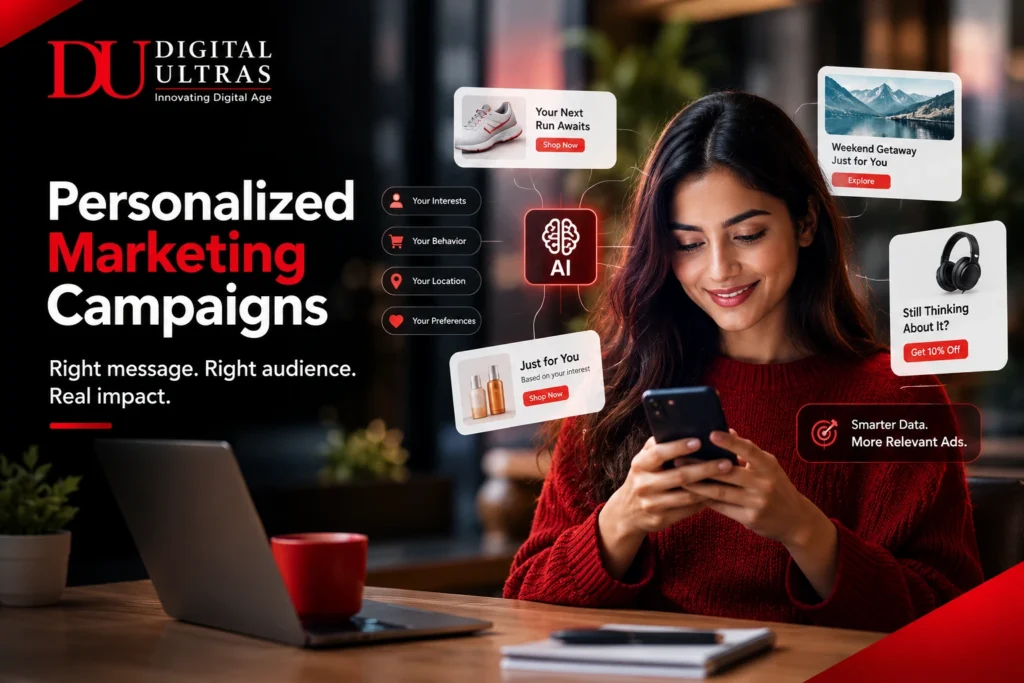
Why Every Campaign Feels Personal Now (And It’s Not a Coincidence)
Marketing campaigns today feel more personal than ever. The ads you see, emails you receive, and products recommended to you are often influenced by your online behavior.
This shift is being driven by personalized marketing campaigns, AI-driven personalization, customer data, and hyper-personalized ads. What may look like coincidence is often the result of smarter marketing technology working behind the scenes.
Why Do Marketing Campaigns Feel So Personal Now?
Brands now collect signals from website visits, searches, purchases, social media interactions, and content engagement.
AI can analyze these signals quickly and help marketers understand what different customers may be interested in. Instead of showing the same message to everyone, brands can create experiences based on individual behavior.
This is why personalized marketing campaigns often feel more relevant than traditional advertising.
What Is Personalized Marketing?
Personalized marketing means creating marketing messages, offers, or experiences based on customer interests, preferences, and behavior.
For example, someone searching for running shoes may later see advertisements for running shoes, sportswear, or related accessories.
The purpose is not simply to show more advertisements. It is to show more relevant advertisements to the right audience at the right time.
How AI-Driven Personalization Is Changing Marketing
AI-driven personalization is making this process faster and easier. AI can analyze large amounts of customer information and identify patterns that may be difficult to find manually.
It can help marketers personalize emails, advertisements, product recommendations, website content, and social media campaigns.
| Traditional Marketing | AI-Driven Personalization |
|---|---|
| Same message for broad audiences | Audience-specific messages |
| Manual audience targeting | Automated audience analysis |
| Limited content variations | Multiple content variations |
| Slower campaign optimization | Faster optimization |
| General recommendations | Behavior-based recommendations |
With AI-driven personalization, marketers can create different experiences for different audience groups without manually building every campaign from scratch.
Why Hyper-Personalized Ads Are Becoming Common
Hyper-personalized ads go beyond basic audience targeting. They can use several signals, such as browsing activity, previous purchases, interests, and interactions with a brand.
For example, if someone visits a product page but does not purchase, they may later see an advertisement related to that product.
This makes hyper-personalized ads feel much more specific than traditional advertising.
However, personalization needs balance. When an advertisement becomes too specific, customers may feel uncomfortable instead of interested. Good personalization should feel helpful rather than intrusive.
How Customer Data Powers Personalized Marketing Campaigns
Customer data is one of the most important foundations of personalized marketing campaigns.
Website activity, search behavior, purchase history, email interactions, and social engagement can provide useful insights into customer preferences.
When these signals are properly organized, marketers can understand different stages of the customer journey and create more relevant communication.
For example, a new visitor may receive educational content, while an existing customer may receive product recommendations or special offers.
The Role of AI in Content Personalization
Creating different content for different audiences can take a lot of time. AI can help marketers create variations of headlines, advertisements, emails, product descriptions, and social media content.
This allows businesses to test different messages while maintaining a consistent brand identity.
For personalized marketing campaigns, this means marketers can reach different audience segments without creating every piece of content manually.
AI can also help identify which messages receive stronger engagement, allowing marketers to improve campaigns more quickly.
Why Every Campaign Feels Personal Now
The reason is simple: more customer data, better AI, and smarter targeting.
A customer’s online actions can provide clues about their interests. AI systems can then analyze those signals and help marketers decide what content or advertisement may be relevant.
For example, searching for a product, visiting a website, watching related content, and interacting with an advertisement can all contribute to a more personalized customer experience.
So, when a campaign seems perfectly timed, it may not be a coincidence. It may be the result of AI-driven personalization and automated marketing systems.
Personalized Marketing Campaigns Across Different Channels
Personalization is no longer limited to email marketing. It now appears across search, social media, websites, e-commerce platforms, and digital advertising.
| Channel | Personalization Example |
|---|---|
| Social Media | Interest-based advertisements |
| Search | Ads based on search intent |
| Personalized offers and recommendations | |
| E-commerce | Behavior-based product suggestions |
| Websites | Customized content and offers |
When these channels work together, personalized marketing campaigns can create a more connected customer journey.
A customer may see an advertisement on social media, visit the website, receive a related email, and later see a product recommendation. Each interaction can build on the previous one.
Are Hyper-Personalized Ads Always Effective?
Hyper-personalized ads are not automatically successful just because they are highly targeted.
If the message is useful and relevant, personalization can improve the customer experience. But if the advertisement feels overly specific, it can create a sense of discomfort.
This is why marketers need to understand the difference between relevance and over-personalization.
The ideal experience should make customers think, “This is useful for me,” rather than, “How does this brand know so much about me?”
What Is the Future of AI-Driven Personalization?
The future of AI-driven personalization will likely focus on faster content creation, smarter audience understanding, and more responsive customer experiences.
AI can help businesses create multiple campaign variations, analyze customer behavior, and adapt marketing messages more quickly.
At the same time, human creativity and strategy remain important. Technology can identify patterns, but marketers still need to decide what the brand should communicate and how it should communicate it.
Why Every Campaign Feels Personal Now (And It’s Not a Coincidence)
The growth of personalized marketing campaigns is changing the relationship between brands and customers.
AI-driven personalization allows businesses to understand audiences more deeply, while hyper-personalized ads make it possible to deliver highly relevant messages across different platforms.
But effective personalization is not about using as much data as possible. It is about using the right information to create experiences that genuinely help customers.
Conclusion
Marketing is moving away from one message for everyone and toward experiences designed around individual interests and behavior.
With AI-driven personalization, businesses can create relevant content, improve targeting, and adapt campaigns faster. At the same time, hyper-personalized ads are making digital advertising more specific than ever.
For Digital Ultras, the future of marketing is not simply about reaching more people. It is about understanding the right audience and creating meaningful interactions that feel relevant, timely, and useful.
